Personalized Learning Pathways
Join our education summit and explore how flexible, learner-centered journeys can be designed to adapt to individual goals, pace, and potential.
Join our education summit and explore how flexible, learner-centered journeys can be designed to adapt to individual goals, pace, and potential.
Education doesn't work the same way for everyone—and it shouldn't have to. Our education leadership summit highlights how personalized learning tailors education to each student's needs, interests, and learning style. At its core, it asks: What does this learner need next?
Personalized learning pathways move us beyond the traditional, one-size-fits-all classroom model. They allow students to move through content at their own pace, engage with material in different formats, and pursue goals aligned with their strengths and aspirations. Whether it's through flexible scheduling, competency-based progress, or adaptive digital tools, a personalized education program gives students more agency in their learning journey—while helping educators better support and track progress.
With the rise of digital tools, data-driven instruction, and more flexible policies, schools can now offer personalized learning that actually works in practice, not just theory. This shift is especially important in a world where real-world skills, problem-solving, and lifelong learning matter more than memorization.
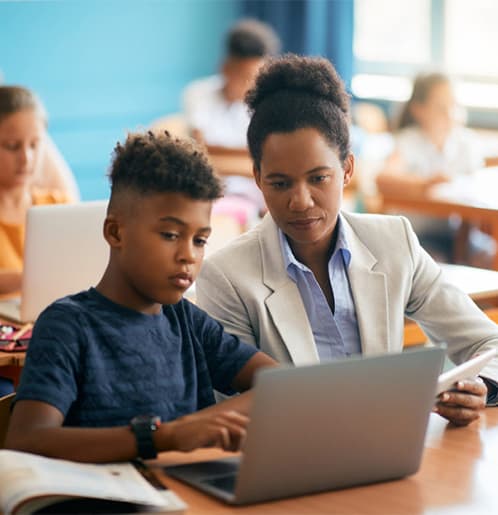
The traditional model of education was designed around efficiency, not individuality. Students progressed in age-based groups, followed the same curriculum, and were measured by standardized benchmarks. But we now know that learning isn't linear, and students develop at different rates.
A personalized education program helps students build ownership of their learning and prepares them for future academic and career success.
Our education innovation summit will explore how personalized learning pathways are being implemented across schools, districts, and platforms. Sessions will include:
How educators are building systems that support personalized pacing, progression, and choice across different grade levels and subject areas.
How student performance data is being used to tailor content and interventions in real time, helping educators respond to individual learning needs quickly.
What it takes to design and deliver learning experiences aligned with individual goals and learning styles, from curriculum mapping to daily instruction.
Making sure that personalized learning supports, rather than widens, opportunity gaps—ensuring every student benefits regardless of background or resources.
Exploring platforms that make it easier to deliver tailored content, feedback, and support—and how to evaluate tools critically before adoption.
How teaching shifts when educators guide students along individual paths, rather than leading a uniform class—and what support teachers need to succeed.
Evaluating progress based on understanding—not time spent in class—and how competency-based models are being recognized by institutions and employers.
Explores why education must adapt to individual variation, challenging the one-size-fits-all model. Rose shares research and stories showing how embracing uniqueness can unlock student potential.
A guide to rethinking classrooms to put learners at the center. Martin offers practical strategies and real-world examples for promoting creativity, curiosity, and self-directed learning.
A concise, action-oriented guide that presents the case for urgent educational transformation and offers frameworks for mobilizing all stakeholders.
Diana Laufenberg shares practical examples from her teaching experience, showing how personalized learning empowers students to take ownership of their education through choice, flexibility, and real-world application.
A dedicated set of episodes diving into strategies, tools, and case studies for implementing personalized learning. Hear from educators, school leaders, and innovators making student-centered learning a reality.
Hosted by South Carolina's Personalized Learning Team, this ongoing series shares real educator and leader stories, including classroom strategies for developing personalized, competency-based learning pathways.
A platform that offers customized learning plans, student goal-setting, and real-time mentoring to support personalized learning pathways.
A flexible learning system built around learner profiles, self-paced progress, and strong teacher support, designed to adapt to individual student needs.
Enhance your existing Google Classroom setup with add-ons that create personalized assignments, integrate third-party learning tools, and build efficient feedback loops.
Not necessarily. While tools help scale, personalized learning pathways can also be built with schedules, mentoring, and project-based learning approaches.
Yes. With strategies like small groups, learning stations, and flexible grouping, you can meet diverse needs even in traditional settings—approaches that will be discussed at our upcoming education summit.
Most programs use ongoing assessment, student dashboards, and teacher conferences to keep learning visible and goal-oriented.
Support structures like regular check-ins, tutoring, and accountability tools are essential parts of any successful personalized education program—strategies that will be shared at our education summit.
Yes. Many schools are adopting elements of personalized learning within district frameworks using existing resources.
The upcoming Education 2.0 Conference is set to be held at key global locations. Please visit our website for the latest dates and venues.
We only accept payments in USD ($).
We accept several payment methods prior to the conference, including VISA, Mastercard, American Express, Maestro, Discover, Bank Transfer, and PayPal. For your convenience, we also have an interest-free installment plan in place. Please contact the team for more information.